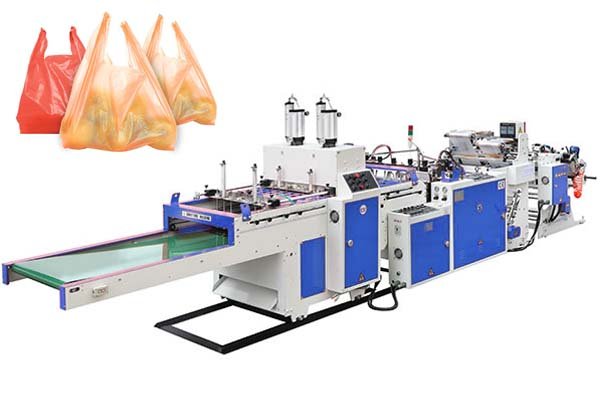

Are you finding it hard to get straight answers on garbage bag machine pricing? This uncertainty makes it difficult to budget and plan your investment. We provide clear, detailed cost information so you can make a smart, confident decision for your business.
A garbage bag manufacturing machine1 from us at BagMec® generally costs between $23,000 and $35,000. The final price depends on the level of automation, production speed, and any specific custom features your operation requires.
This price range reflects the machine's capabilities and build quality. A machine at the lower end of the spectrum is a solid, reliable workhorse, perfect for startups or businesses with standard production needs. As you move toward the higher end, you are investing in more advanced features. These include higher speeds, full automation with PLC controls, and specialized units for unique bag designs. All our machines are built with high-carbon steel and meet CE and ISO 9001 standards, ensuring durability and a strong return on your investment.
The investment you make connects directly to your production output and efficiency. A fully automated system, for instance, reduces labor costs and minimizes material waste. Our energy-saving servo motors can also cut power consumption by up to 30%. This saves you money over the life of the machine. We work with you to find the perfect balance between features and budget. This ensures the machine you choose is the right fit for your long-term goals.
What material is a garbage bag made of?
Now that we have covered the machine cost, let's talk about the raw materials. Your choice of material directly impacts your product's quality, cost, and market position.
Garbage bags are mainly made from different types of polyethylene (PE) plastic film. The most common are Low-Density Polyethylene (LDPE)2 for its flexibility and High-Density Polyethylene (HDPE)3 for its superior strength and puncture resistance.
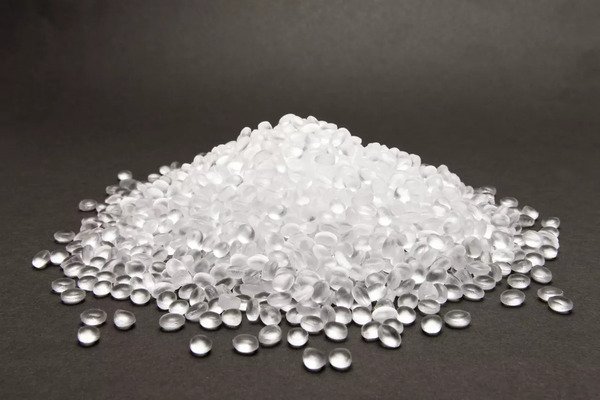
Choosing the right material is a critical decision in the manufacturing process. The material determines the final properties of the bag, such as its strength, flexibility, and even its environmental impact. At BagMec®, we design our machines to be compatible with a wide range of materials. This gives you the flexibility to produce different types of bags for various markets. From standard household trash bags to heavy-duty industrial liners and even eco-friendly options, our machines handle it all with precision.
The Core Materials: HDPE vs. LDPE
The two most dominant materials in the industry are HDPE and LDPE. Understanding their differences is key to producing the right bag for your target customer.
- High-Density Polyethylene (HDPE): This material is known for its excellent strength-to-density ratio. Bags made from HDPE can be thinner and lighter than their LDPE counterparts but still offer incredible strength and puncture resistance. It's the material behind the thin, crinkly bags you often find in office wastebaskets or as produce bags in supermarkets. Its strength makes it ideal for carrying heavy loads without tearing.
- Low-Density Polyethylene (LDPE): LDPE is much more flexible and has a softer feel. It offers good tensile strength and is more resistant to tearing than HDPE, although it is less puncture-resistant. These properties make it perfect for thicker bags like heavy-duty contractor bags or standard kitchen garbage bags that need to stretch to accommodate bulky, irregular objects.
Here is a simple breakdown to help you compare them:
| Feature | High-Density Polyethylene (HDPE) | Low-Density Polyethylene (LDPE) |
|---|---|---|
| Feel & Sound | Stiffer, makes a "crinkly" sound | Softer, quieter |
| Strength | Very high tensile strength, puncture-resistant | Good stretch, more tear-resistant |
| Clarity | More opaque or translucent | Can be very clear |
| Typical Use | Office waste bags, grocery bags, industrial liners | Kitchen trash bags, contractor bags, can liners |
| Thickness | Can be made very thin (lower microns) | Generally thicker for strength |
Our machines, equipped with our patented "Smart Tension Control," handle both HDPE and LDPE films flawlessly. This technology ensures consistent film feeding, preventing tears and ensuring a perfect seal every time, regardless of the material's thickness.
The Rise of Eco-Friendly Alternatives
Consumer demand for sustainable products is growing. In response, the industry is moving toward biodegradable and compostable materials. We recognized this trend early on and have engineered our machines to work with these innovative films.
- Polylactic Acid (PLA): PLA is a bioplastic derived from renewable resources like corn starch or sugarcane. It is commercially compostable, meaning it breaks down into natural elements in an industrial composting facility.
- Biodegradable Additives: Other solutions involve adding special additives to traditional PE films. These additives help the plastic break down more quickly under specific conditions.
We have hands-on experience in this area. We partnered with a US Eco-Brand to co-develop machines specifically for their 100% compostable PLA shopping bags. This kind of collaboration is at the heart of what we do. We help our clients innovate and meet the demands of a changing market.
How does a garbage bag machine work?
Understanding the machine's operation helps you appreciate where your investment goes. The process is a fascinating blend of mechanical precision and automation control.
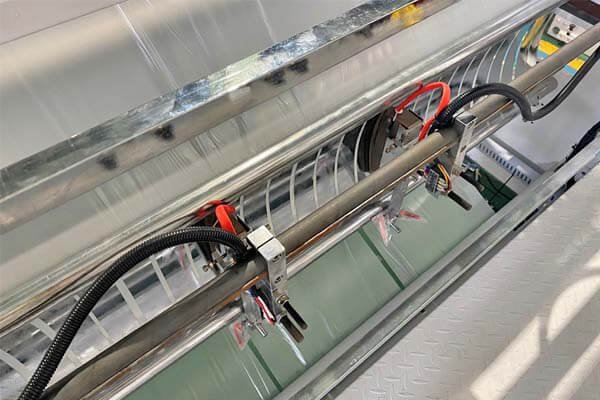
A garbage bag machine works in three main stages: it unwinds a large roll of plastic film, uses a heated bar to seal the film and a blade to cut it into individual bags, and then stacks or rolls the finished bags for packaging.
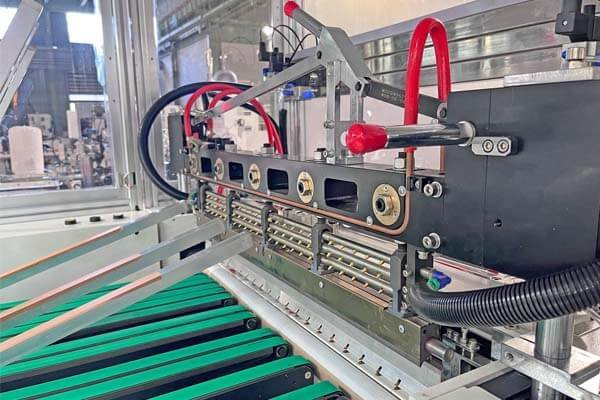
At BagMec®, we have refined this process for maximum efficiency and reliability. Our machines are designed for simple operation and consistent output. The entire process is managed through a central PLC touchscreen interface, which is available in multiple languages. This allows your operators to set parameters, monitor production, and troubleshoot with ease. Let's look deeper into each stage.
Stage 1: Film Unwinding and Feeding
The process starts with a large, continuous roll of flattened plastic tubing, called film. This roll is mounted on an unwinding station.
- Tension Control is Key: The film must be pulled off the roll and fed into the machine at a constant speed and tension. This is where our patented "Smart Tension Control" system is a game-changer. It automatically adjusts to maintain consistent tension, preventing the film from stretching or sagging. This is crucial for creating uniform bags and reducing waste, especially when working with thin or delicate materials.
Stage 2: Sealing and Cutting
This is the heart of the machine, where the bag is actually formed.
- Sealing: The film passes under a heated sealing bar. This bar presses down on the film, melting the plastic to create a strong, leak-proof bottom seam. The temperature and pressure are precisely controlled by the PLC system to ensure a perfect seal every time. For different bag types, this unit can be changed. For example, a star seal, common for kitchen bags, requires a special sealing pattern.
- Cutting: Immediately after sealing, a sharp blade cuts the film to separate one bag from the next. The timing between sealing and cutting is synchronized perfectly to determine the length of the bag.
Stage 3: Stacking, Folding, or Rolling
Once the bags are cut, they need to be collected for packaging. Our machines offer different systems depending on your needs.
- Stacking: A simple conveyor belt moves the bags to a collection table where they are neatly stacked.
- Folding and Rolling (Coreless Rolls): For kitchen bags sold on a roll, the machine can be equipped with a winding unit. This unit automatically rolls a set number of bags into a tight, coreless roll before the next roll begins.
- Drawstring Insertion: More advanced machines include a station to insert a drawstring into the top of the bag before it is sealed and folded.
Our 72-hour continuous operation stress test ensures that every one of these components works together seamlessly before the machine ever leaves our ISO 9001-certified facility.
What factors determine the final price of a garbage bag machine?
The price range of $23,000 to $35,000 is a good starting point, but what specific factors push a machine toward the higher end? It comes down to a combination of speed, automation, and customization.
The final price of a garbage bag machine is determined by its production speed (bags per minute), level of automation, bag type capabilities (e.g., drawstring or star seal), and any custom features like printing units or special dies.

Think of it like buying a car. The base model will get you where you need to go, but adding a more powerful engine, an advanced navigation system, and a premium sound system will increase the cost. Similarly, adding features to your bag making machine enhances its performance and capabilities. We believe in transparency, so let’s break down the key cost factors.
Key Price-Determining Factors
We can separate the factors into a few main categories. Understanding these will help you configure a machine that meets your needs and your budget.
1. Performance and Automation
This is the single biggest factor. Higher performance equals a higher price.
- Production Speed: A machine that produces 200 bags per minute will cost less than a high-speed model that produces 400 bags per minute.
- Automation Level:
- Semi-Automatic: Requires more operator involvement, for example, to manually change rolls or adjust settings. ($23,000 range)
- Fully-Automatic: Features PLC touchscreens, automatic roll changes, and self-diagnostics. This reduces labor costs and increases uptime. ($35,000 range)
- Servo Motors: Our machines use energy-saving servo motors. While they add to the initial cost, they reduce power consumption by up to 30%, offering long-term savings.
2. Bag Type and Complexity
The type of bag you want to produce heavily influences the machine's design and cost.
- Bottom Seal Bags: These are the simplest to make and require a standard machine.
- Star Seal Bags: These require a more complex sealing mechanism to create the distinctive, leak-proof seal.
- Drawstring Bags: These require an entirely separate module to insert and attach the drawstring, adding significantly to the cost.
- Bags-on-a-Roll: A machine with a winder for producing coreless rolls is more expensive than one that simply stacks bags.
3. Customization and Add-On Modules
We can add various modules to meet your specific production needs.
- In-line Printing: A one or two-color printing unit can be added to print logos or branding directly on the bags.
- Embossing Units: These create texture on the film.
- Special Dies: Custom-shaped cutting dies for things like T-shirt bag handles.
Here’s a comparison to illustrate the difference:
| Feature | Standard Machine (~$23,000) | Advanced Machine (~$35,000) |
|---|---|---|
| Control System | Basic button controls | Multi-language PLC Touchscreen |
| Motor | Standard Motor | Energy-Saving Servo Motor |
| Speed | Up to 150-200 bags/min | Up to 250-400 bags/min |
| Bag Type | Bottom seal, flat bags | Bottom seal, star seal, optional drawstring |
| Automation | Semi-automatic roll change | Fully automatic tension & roll change |
| Diagnostics | Basic fault indicators | IoT-enabled remote diagnostics |
As a procurement manager like Hans Fischer from Germany might require, a machine that meets stringent EU hygiene and noise standards would fall into the advanced category. For a startup founder like Priya Kapoor in India, a compact, reliable machine in the standard range would be a perfect fit under a $50,000 budget. We tailor the solution to the client.
Conclusion
Choosing the right garbage bag machine is a major decision. It requires a clear understanding of both cost and capability. Our machines, priced from $23,000 to $35,000, offer a range of solutions for every need, backed by superior engineering and global support.
-
Explore this link to gain insights into pricing trends and factors affecting the cost of garbage bag manufacturing machines, helping you budget effectively. ↩
-
Discover the unique properties of LDPE and its applications in various industries, which can inform your material choices for production. ↩
-
Learn about the advantages of HDPE in manufacturing, including its strength and versatility, which can enhance your product offerings. ↩